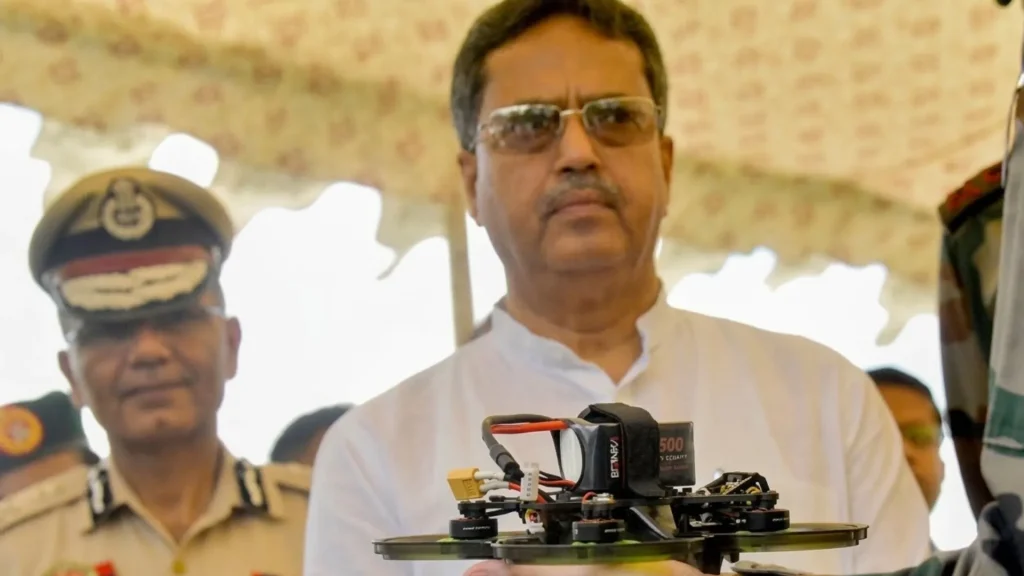
The global unmanned aerial vehicle (UAV) market has moved far beyond hobbyist quadcopters and experimental military platforms. As of early 2026, drones are now central to national security strategies, precision agriculture, industrial inspection, logistics, disaster response, and even public health delivery systems.
Globally, the UAV market is in the midst of structural expansion. Depending on scope – hardware alone versus hardware plus services and analytics – estimates for 2025 range from roughly USD 26 billion to over USD 45 billion. By the early 2030s, most projections converge toward a market well north of USD 160 billion, with some stretching beyond USD 200 billion by 2035.
India's UAV Market: A Sector on the Rise
India’s drone industry is scaling with intent. Market estimates vary, but the trajectory is consistent: a market valued between USD 0.5–1.5 billion today could expand to anywhere between USD 3–5 billion by 2030, growing at 20–24 percent CAGR.
Under Atmanirbhar Bharat, the government has positioned the India drone industry as a sunrise sector – a technology that intersects food security, defense modernization, infrastructure mapping, and digital governance. Over 500 drone-related companies are now active across the value chain, including more than 200 startups.
India’s ambition is clear: become a global drone hub by 2030. Early milestones targeted INR 120–150 billion in sector turnover by the mid-2020s – and momentum suggests the target is not aspirational rhetoric.
Three inflection forces are reshaping the UAV market India 2026:
- AI-powered autonomy enabling real-time navigation and edge analytics
- Regulatory breakthroughs around Beyond Visual Line of Sight (BVLOS) operations
- Battery and hybrid propulsion improvements extending endurance
North America remains the largest revenue generator, particularly in defense and enterprise services. But the real velocity lies in Asia-Pacific. And within that geography, India is no longer an emerging footnote – it is a central chapter.
Agricultural Drones in India: Precision Farming at Scale
Agriculture accounts for roughly one-third of India’s commercial drone demand. In a country where farm productivity directly links to economic stability, agricultural drones in India are emerging as force multipliers.
Precision spraying, crop health imaging, soil diagnostics, and seed dispersal are no longer pilot projects – they are operational tools. Government-backed initiatives like Kisan Drone and Namo Drone Didi have accelerated adoption, particularly through subsidies and training for women-led self-help groups.
Companies such as Garuda Aerospace and Marut Drones are building scale around agri-use cases. Garuda secured significant Series B funding in 2025, strengthening its manufacturing and services footprint.
Field deployments report yield improvements of 10–20 percent alongside reductions in input costs. In an economy where incremental gains matter, that delta is material.
Drone-as-a-Service: Democratising Technology for Small Farmers
The most powerful innovation in India’s agricultural drone segment may not be hardware – it is the business model. Drone-as-a-Service (DaaS) allows small farmers to access spraying and mapping without capital expenditure. For fragmented landholdings, this shared-access model is transformational.
DaaS is now a cornerstone of India drone policy thinking, as it enables scale without requiring individual smallholders to own equipment. This model is expected to drive the majority of agri-drone adoption in Tier 2 and Tier 3 districts through 2030.
Defense Drones in India: Autonomy as National Strategy
If agriculture is the commercial engine, defense is the strategic spine of India’s drone revolution. India’s military UAV segment is projected to grow from roughly USD 1 billion today to potentially USD 3–5 billion by the early 2030s. Surveillance, border patrol, loitering munitions, swarm systems, and counter-drone capabilities are central priorities.
The procurement of Medium Altitude Long Endurance (MALE) platforms, alongside accelerated indigenous programs, signals a structural shift toward autonomous systems within India’s broader defense modernization agenda.
With India’s defense budget nearing USD 87 billion in FY2026, autonomous systems are no longer experimental line items – they are embedded in planning.

Key Players Driving India's Military Drone Sector
Domestic players are now integral to India’s defense drone transition. ideaForge Technology has built one of the largest operational footprints in surveillance UAVs deployed by Indian security forces. Meanwhile, Raphe mPhibr raised USD 100 million in 2025 to expand military-grade production capacity.
Private-sector participation has deepened through initiatives such as iDEX and partnerships with public-sector defense enterprises. Zen Technologies strengthened its UAV capabilities through the acquisition of Vector Technics in 2025, while Hindustan Aeronautics Limited’s Naini Aerospace division has entered collaborative programs to advance precision drone systems.
Beyond Farms and Frontiers: India's Drone Industry Diversifies
Drone adoption in India is accelerating across multiple adjacent sectors, broadening the base of the India drone industry well beyond agriculture and defense.
- Infrastructure mapping and highway construction monitoring
- Power-line, pipeline, and solar farm inspection
- Mining site analysis and volumetric surveys
- Medical supply delivery in remote geographies
Ecosystem players such as Asteria Aerospace, Dhaksha Unmanned Systems, Paras Aerospace, and DroneAcharya are broadening the landscape from analytics to training and industrial inspection. Consolidation is underway – not as aggressive M&A waves, but as targeted capability acquisitions to strengthen technology stacks.
The Capital Surge: Investment Fuelling India's Drone Startups
Investment momentum mirrors policy momentum across drone startups in India. Defense-tech startups collectively raised nearly USD 250 million in 2025, with drone-focused ventures accounting for a substantial share.
Venture capital is no longer treating drones as speculative hardware plays. The value proposition now spans recurring service revenue, analytics platforms, and export potential. Joint ventures and global collaborations are increasing as international firms look to localise manufacturing and access India’s rapidly expanding domestic market.
India's Drone Policy: From Regulatory Control to Growth Catalyst
India drone policy has undergone a decisive transformation. The Drone Rules 2021 marked a decisive liberalisation – reducing approval timelines, digitising airspace permissions through the Digital Sky platform, and designating most airspace below 400 feet as green zones.
The Draft Civil Drone (Promotion & Regulation) Bill 2025 aims to provide statutory backbone to the ecosystem, covering manufacturing standards, insurance, penalties, and data governance.
Production-Linked Incentive (PLI) schemes for drones and components have strengthened domestic manufacturing economics. Import restrictions on fully built foreign drones are nudging localisation. GST reductions in certain categories have improved affordability.
Foreign Direct Investment norms now permit up to 100 percent automatic route in most manufacturing segments, with expanded thresholds for defense-related investments under specific conditions.
This is regulatory engineering designed not to restrict flight – but to structure it.
The Road to 2030: India Drone Industry Outlook
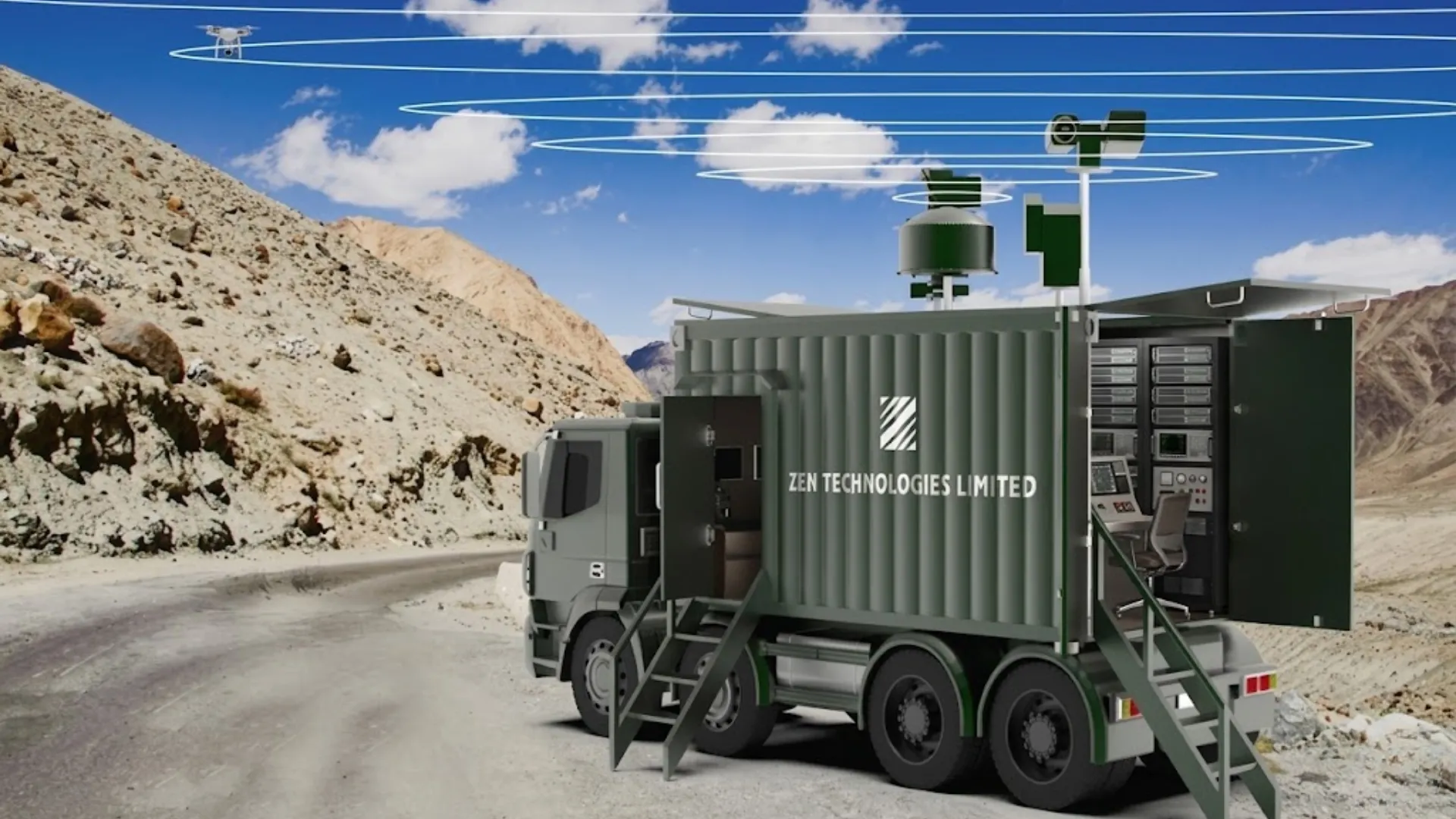
By 2030, India’s drone revolution will likely make drones invisible in their ubiquity. They will map infrastructure before ground crews arrive. They will spray fields before dawn. They will patrol borders autonomously. They will inspect wind farms without scaffolding.
Globally, UAVs are evolving into integrated platforms – combining AI, cloud connectivity, and swarm intelligence. In India, this evolution is aligned with national priorities: food security, industrial modernisation, defense resilience, and digital governance.
Yet scale introduces friction. Component localisation remains incomplete, particularly in high-end sensors and propulsion systems. Skilled pilot and technician pipelines must expand rapidly. Data governance frameworks must evolve alongside surveillance capabilities. Export competitiveness will require quality assurance and global certification alignment.
The ecosystem is maturing – but maturity demands systems, not just startups.
India’s drone moment is not about devices in the sky. It is about architecture on the ground – policy architecture, capital architecture, manufacturing architecture. The runway is built. The systems are powering up.
The question is no longer whether India’s drone industry will take off.
It already has.
Related Insights




Get Our Latest Newsletter Direct To Your Mailbox
Subscribe Now