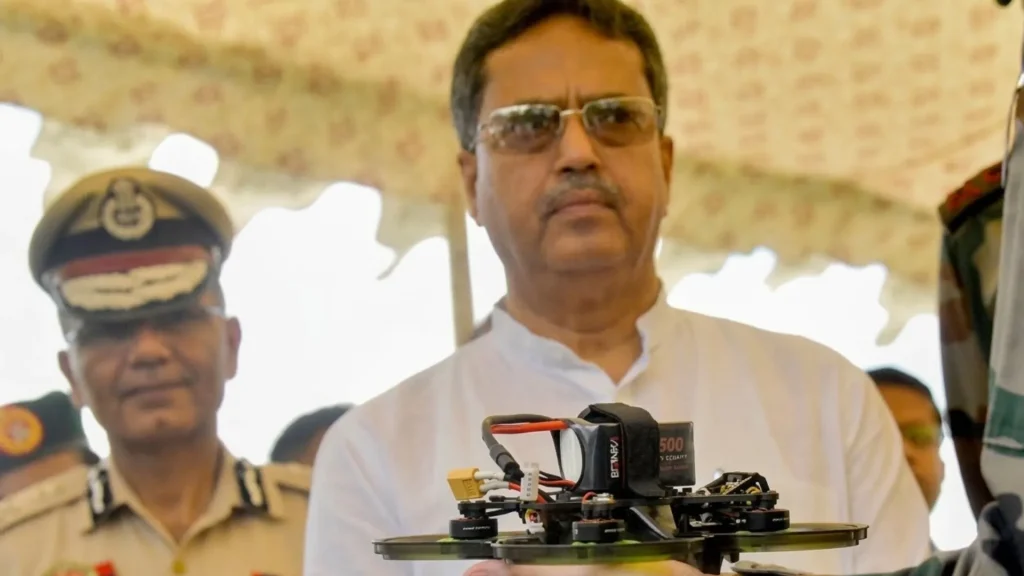
The global unmanned aerial vehicle (UAV) market has moved far beyond hobbyist quadcopters and experimental military platforms. As of early 2026, drones are central to national security strategies, precision agriculture, industrial inspection, logistics, disaster response, and public health delivery systems. What was once a niche technology has become foundational infrastructure for a growing number of economies and India is among the most consequential actors in shaping what comes next.
Globally, the UAV market is in the midst of structural expansion. Depending on scope hardware alone versus hardware plus services and analytics estimates for 2025 range from roughly USD 26 billion to over USD 45 billion. By the early 2030s, most projections converge toward a market well north of USD 160 billion, with some stretching beyond USD 200 billion by 2035.
India's UAV Market: A Sector on the Rise
India’s drone industry is scaling with intent. Market estimates vary, but the trajectory is consistent: a market valued at USD 0.5 billion today could expected to be USD 1.4 billion by 2030, growing at 24% CAGR.
Under Atmanirbhar Bharat, the Government of India has officially positioned the drone industry as a sunrise sector — a technology that intersects food security, defence modernisation, infrastructure mapping, and digital governance. The Ministry of Civil Aviation’s stated national goal is to make India a global drone hub by 2030, supported by the Production-Linked Incentive (PLI) scheme and the liberalised Drone Rules 2021 as the primary policy instruments.MoCA PLI PIB
As of January 2026, Tracxn data records 526 drone-related companies active across India’s UAV value chain spanning manufacturers, component specialists, service providers, training organisations, and analytics platforms.Tracxn Jan 2026 Three structural forces are reshaping this market in 2026: AI-powered autonomy enabling real-time edge analytics, regulatory progress on BVLOS operations, and battery and hybrid propulsion improvements extending flight endurance.
Three inflection forces are reshaping the UAV market India 2026:
- AI-powered autonomy enabling real-time navigation and edge analytics
- Regulatory breakthroughs around Beyond Visual Line of Sight (BVLOS) operations
- Battery and hybrid propulsion improvements extending endurance
North America remains the largest revenue generator, particularly in defense and enterprise services. But the real velocity lies in Asia-Pacific. And within that geography, India is no longer an emerging footnote – it is a central chapter.
Agricultural Drones in India: Precision Farming at Scale
Agriculture is among the largest verticals in India’s commercial drone demand consistently ranking alongside defence and infrastructure inspection as a primary application category. In a country where farm productivity is directly linked to rural economic stability, agricultural drones have moved from pilot projects to operational tools across multiple crop systems and geographies.
Precision spraying, crop health imaging, soil diagnostics, and seed dispersal are now embedded in field operations. The government has catalysed adoption through two major policy-backed initiatives that place drones directly in the hands of farmers and farmer-adjacent enterprises.
The Kisan Drone initiative, administered under the Sub-Mission on Agricultural Mechanization (SMAM), provides financial assistance of up to 100% of drone cost (capped at Rs. 10 lakhs per drone) to ICAR institutions, KVKs, and State Agriculture Universities for field demonstrations. FPOs receive up to 75% subsidy; individual small and marginal farmers receive 40-50% assistance.MoA SMAM PIB Total funds released for Kisan Drone promotion exceeded Rs. 141 crore as of late 2023, covering more than 1,500 Custom Hiring Centres established for drone services.
The Namo Drone Didi scheme a Central Sector Scheme with a total outlay of Rs. 1,261 crore for 2023-24 to 2025-26 targets the provision of 15,000 drones to women-led Self-Help Groups (SHGs).MoA Drone Didi PIB Central Financial Assistance covers 80% of drone package cost (up to Rs. 8 lakhs per SHG), including 15 days of drone pilot training. The scheme simultaneously advances agricultural technology adoption and rural women’s economic empowerment with SHGs functioning as drone service providers rather than equipment owners.
Drone-as-a-Service: Democratising Technology for Small Farmers
The most consequential innovation in India’s agricultural drone segment may not be the hardware itself it is the business model built around it. Drone-as-a-Service (DaaS) enables small farmers to access precision spraying and crop mapping without any capital expenditure, making the technology viable for the fragmented landholding structures that characterise most of India’s agricultural geography.
DaaS is now a cornerstone of government policy design, explicitly embedded within the Kisan Drone and Namo Drone Didi frameworks as the mechanism for broad-based adoption in Tier 2 and Tier 3 districts. Companies such as Garuda Aerospace and Marut Drones have built commercial scale around agri-use cases. Garuda Aerospace raised ₹100 crore (~USD 12 million) in a Series B round in April 2025, led by Venture Catalysts at a pre-money valuation of USD 250 million, to expand its manufacturing capacity and DaaS services footprint.Business Standard Apr 2025
Defense Drones in India: Autonomy as National Strategy
If agriculture is the commercial engine, defense is the strategic spine of India’s drone revolution. India’s military UAV segment is projected to grow from roughly USD 1 billion today to potentially USD 3.5 billion by the early 2030s. Surveillance, border patrol, loitering munitions, swarm systems, and counter-drone capabilities are central priorities.
The procurement of Medium Altitude Long Endurance (MALE) platforms, alongside accelerated indigenous programs, signals a structural shift toward autonomous systems within India’s broader defense modernization agenda.
India’s Union Budget 2025-26 allocated INR 6,81,210 crore (approximately USD 78–80 billion) to the Ministry of Defence an increase of 9.53% over the previous financial year, and the highest allocation among all ministries.PIB – MoD Budget FY2025-26 (Official) Of this, INR 1,80,000 crore is earmarked as capital outlay on defence services, with 75% of the modernisation budget reserved for domestic procurement creating a direct, structural demand pull for indigenous drone manufacturers. DRDO received an allocation of INR 26,816.82 crore for R&D 12.41% higher than the previous year.PIB Official

Key Players Driving India's Military Drone Sector
Domestic players are now integral to India’s defense drone transition. ideaForge Technology has built one of the largest operational footprints in surveillance UAVs deployed by Indian security forces. Meanwhile, Raphe mPhibr raised USD 100 million in 2025 to expand military-grade production capacity.
Raphe mPhibr raised USD 100 million in an all-equity Series B round in June 2025 the largest private fundraise in India’s drone industry to date led by General Catalyst with participation from Think Investments, taking total capital raised to USD 145 million.IBEF Jun 2025 The Noida-based company manufactures nine drone models for customers across the Indian Army, Navy, Air Force, and paramilitary forces, including the mR10 swarm platform, the mR20 high-altitude logistics drone, and the Bharat man-portable surveillance system. The company had logged over one million kilometres of flight and developed more than 100 proprietary technologies as of the funding announcement.
Private-sector participation has deepened through iDEX (Innovations for Defence Excellence), which committed a five-year budgetary allocation of INR 498.8 crore (approximately USD 67 million) to defence innovation in 2021, engaging MSMEs, startups, and research institutions in developing scalable technologies.Invest India – iDEX Zen Technologies expanded its UAV capabilities in February 2025 through the acquisition of a 51% controlling stake in Vector Technics Private Limited — a specialist in drone propulsion and power distribution systems — broadening its product portfolio from combat training simulators into aerospace components and UAV propulsion.Business Standard Feb 2025
Private-sector participation has deepened through initiatives such as iDEX and partnerships with public-sector defense enterprises. Zen Technologies strengthened its UAV capabilities through the acquisition of Vector Technics in 2025, while Hindustan Aeronautics Limited’s Naini Aerospace division has entered collaborative programs to advance precision drone systems.
Beyond Farms and Frontiers: India's Drone Industry Diversifies
Drone adoption in India is accelerating across multiple adjacent sectors, broadening the base of the India drone industry well beyond agriculture and defense.
- Infrastructure mapping and highway construction monitoring
- Power-line, pipeline, and solar farm inspection
- Mining site analysis and volumetric surveys
- Medical supply delivery in remote geographies
Ecosystem players such as Asteria Aerospace, Dhaksha Unmanned Systems, Paras Aerospace, and DroneAcharya are broadening the landscape from analytics to training and industrial inspection. Consolidation is underway – not as aggressive M&A waves, but as targeted capability acquisitions to strengthen technology stacks.
The Capital Surge: Investment Fuelling India's Drone Startups
Investment momentum mirrors policy momentum across drone startups in India. Defense-tech startups collectively raised nearly USD 250 million in 2025, with drone-focused ventures accounting for a substantial share.
Venture capital is no longer treating drones as speculative hardware plays. The value proposition now spans recurring service revenue, analytics platforms, and export potential. Joint ventures and global collaborations are increasing as international firms look to localise manufacturing and access India’s rapidly expanding domestic market.
India's Drone Policy: From Regulatory Control to Growth Catalyst
India drone policy has undergone a decisive transformation over the past four years. What was a restrictive, permission-intensive framework has been redesigned into one of the more supportive operational environments for commercial drone activity in any major economy. The cumulative effect of the Drone Rules 2021, the PLI scheme, the import policy, and airspace management reforms creates a coherent policy architecture that reinforces itself.
The Drone Rules 2021 (Gazette Notification G.S.R. 589(E), 25 August 2021) was the pivotal reform. The Rules reduced approval timelines, digitised all airspace permissions through the DGCA’s Digital Sky Platform, and designated approximately 90% of Indian airspace below 400 feet as green zones where drones may operate without prior permission. The Digital Sky Platform provides single-window management for drone registration, pilot licensing, and flight authorisations.
The Production-Linked Incentive Scheme for Drones and Drone Components, notified on 30 September 2021, provides a total incentive of INR 120 crore over three financial years, at a PLI rate of 20% of value addition the highest rate among India’s 14 PLI schemes. The minimum value addition requirement of 40% of net sales incentivises deep domestic component localisation. Operational guidelines were issued by MoCA on 29 November 2022.
Under India’s FDI policy, 100% foreign direct investment is permitted through the automatic route in civilian drone manufacturing. Defence-related drone manufacturing permits up to 74% FDI via the automatic route, with higher thresholds accessible via the government approval route. This has enabled joint ventures as international firms seek to localise production within India.
This is regulatory engineering designed not to restrict flight – but to structure it.
The Road to 2030: India Drone Industry Outlook
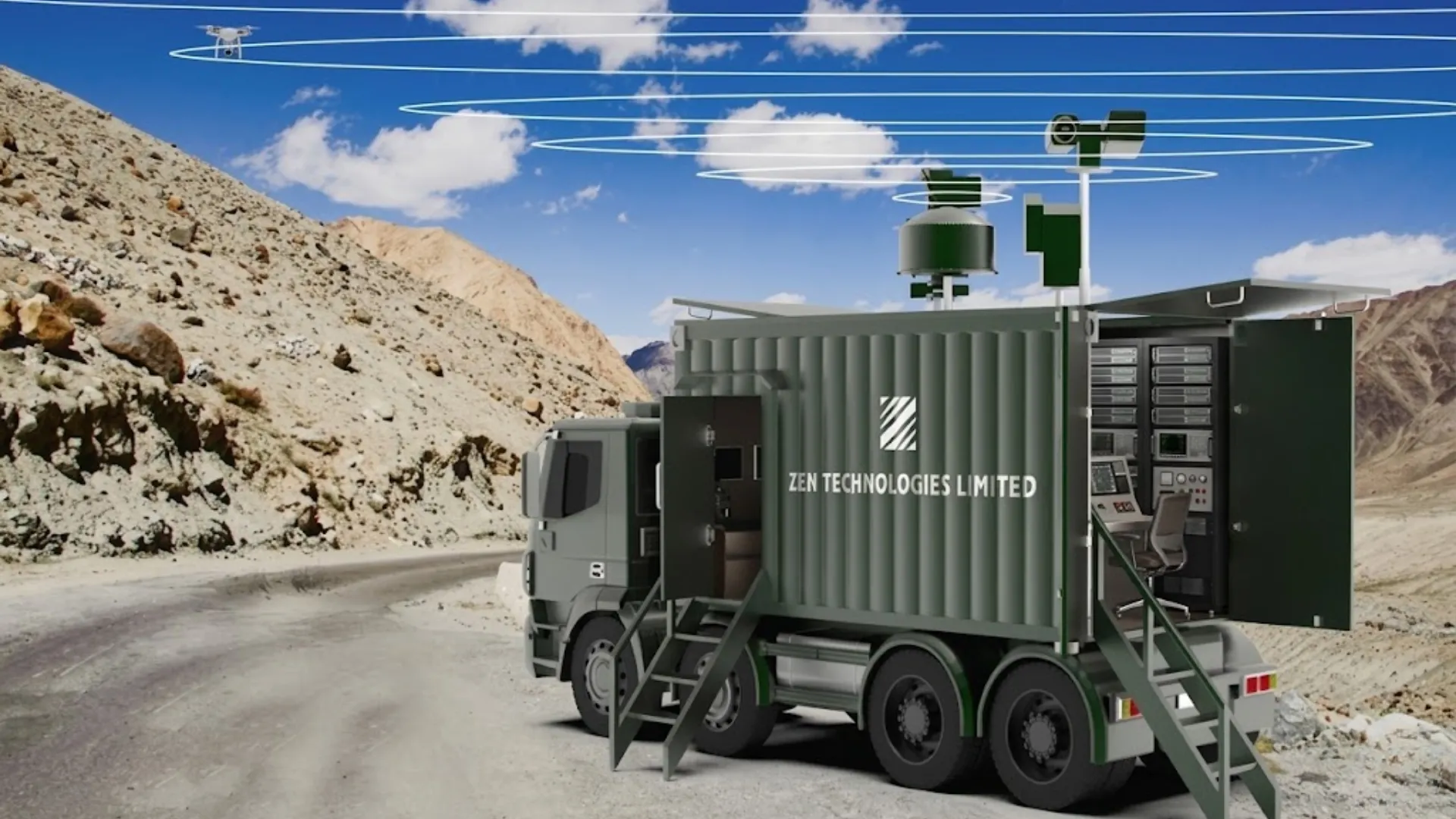
By 2030, India’s drone revolution will likely make drones invisible in their ubiquity. They will map infrastructure before ground crews arrive. They will spray fields before dawn. They will patrol borders autonomously. They will inspect wind farms without scaffolding.
Globally, UAVs are evolving into integrated platforms – combining AI, cloud connectivity, and swarm intelligence. In India, this evolution is aligned with national priorities: food security, industrial modernisation, defense resilience, and digital governance.
Yet scale introduces friction. Component localisation remains incomplete, particularly in high-end sensors and propulsion systems. Skilled pilot and technician pipelines must expand rapidly. Data governance frameworks must evolve alongside surveillance capabilities. Export competitiveness will require quality assurance and global certification alignment.
The ecosystem is maturing – but maturity demands systems, not just startups.
India’s drone moment is not about devices in the sky. It is about architecture on the ground – policy architecture, capital architecture, manufacturing architecture. The runway is built. The systems are powering up.
The question is no longer whether India’s drone industry will take off.
It already has.
Sources
- https://www.pib.gov.in/PressReleaseIframePage.aspx?PRID=1822838®=3&lang=2
- https://www.pib.gov.in/Pressreleaseshare.aspx?PRID=1779782®=3&lang=2
- https://tracxn.com/d/explore/drones-startups-in-india/__gSDfPZkFoOxgCGVX0gqCXECXtkJ1KA1Nsoz8bS1U0Rs
- https://www.pib.gov.in/PressReleaseIframePage.aspx?PRID=1985470®=3&lang=2
- https://www.pib.gov.in/PressReleasePage.aspx?PRID=2149706®=3&lang=2
- https://www.business-standard.com/companies/news/garuda-aerospace-raises-100-cr-in-series-b-funding-from-venture-catalysts-125041600457_1.html
- https://www.pib.gov.in/PressReleasePage.aspx?PRID=2098485®=3&lang=2
- https://www.ibef.org/news/raphe-mphibr-raises-rs-855-crore-us-100-million-in-landmark-defence-drone-funding-round
- https://www.investindia.gov.in/team-india-blogs/fly-high-new-and-liberalised-drone-certification-scheme
- https://www.business-standard.com/markets/capital-market-news/zen-technologies-announces-strategic-investment-in-vector-technics-and-bhairav-robotics-125021700191_1.html
- https://digitalsky.dgca.gov.in/assets/files/Draft-DronesRules-2021_Gazette%20version_14-Jul-2021.pdf
- https://www.pib.gov.in/Pressreleaseshare.aspx?PRID=1779782®=3&lang=2
- https://www.pib.gov.in/PressReleasePage.aspx?PRID=1880690®=3&lang=2
- https://www.pib.gov.in/PressReleaseIframePage.aspx?PRID=2007876®=3&lang=2
Related Insights




Get Our Latest Newsletter Direct To Your Mailbox
Subscribe Now